- Your Pet's Wellbeing
- Posts
- Why Does My Cat Bring Me “Gifts” Like Mice or Toys?

If your cat has proudly dropped a toy at your feet or, more alarmingly, delivered a real mouse to your doorstep, you’re not the first! Many cat parents experience this curious behavior and wonder what it means. While it might feel a little unsettling when the “gift” is something you would never have chosen yourself, this behavior actually says a lot about your cat’s instincts, intelligence, and relationship with you.
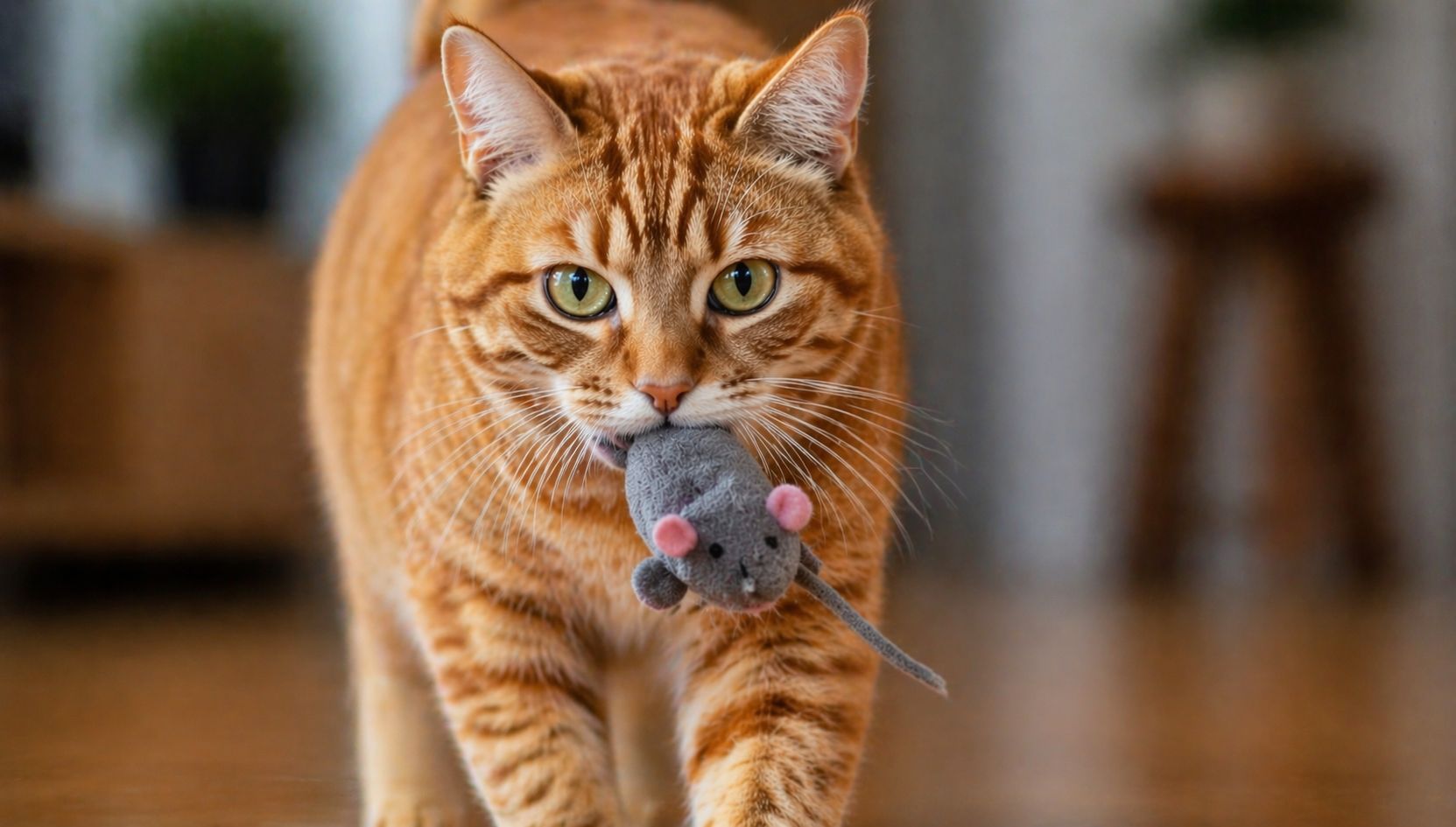
Below are just some of the reasons why your cat loves to bring you some of his or her favorite items:
A Cat’s Hunting Instinct Is Hardwired
The most common reason your cat loves to bring you things is that this behavior is deeply ingrained in your cat’s hunting instinct. Even the most pampered indoor cats retain the natural drive to stalk, chase, and capture prey. This instinct comes from their wild ancestors, who relied on hunting for survival.
When your cat brings you a mouse, bird, or even a stuffed toy, they are acting out this innate instinctive response. The hunt itself is rewarding, but the act of delivering the “catch” is part of the full behavioral cycle. In the wild, mother cats hunt not only to feed themselves but also to provide for their kittens.
Even if your cat has never had to hunt for food, his or her brain still operates as if these behaviors are necessary. That’s why even the most well-fed cats may still stalk shadows, pounce on string, and present you with their “catch” afterward.
It’s a Sign of Affection and Trust
Cats don’t just share resources with anyone. Bringing you a gift can also be a sign of trust and affection. In feline social structures, sharing food or prey is a meaningful gesture. It indicates that your cat feels safe with you and considers you part of their inner circle.
If your cat consistently brings you toys or prey and seems relaxed or even pleased afterward, they are likely expressing a positive emotional connection. Some cats will even vocalize or call out before presenting their gift, almost as if announcing their success.
This behavior often appears in cats that have strong bonds with their pet parents. It’s their way of interacting with you using the language they understand best – communicating with actions and not words.
Your Cat May Be Trying to Teach You
Another reason behind this behavior is that your cat sees you as part of their family, and possibly even as someone who needs help learning how to hunt.
Mother cats often bring prey back to their kittens in stages. First, they deliver dead prey. Later, they may bring injured or live prey so their kittens can practice hunting skills. This gradual teaching process helps young cats develop the skills they need to survive.
When your cat brings you a gift, especially if they linger nearby or seem to expect a reaction, they may be engaging in a similar teaching behavior. From their perspective, you might seem like a large, slightly clumsy cat who isn’t very good at catching prey. Offering you their catch could be their way of helping you become a part of their world: a sign of inclusion and bonding.
Why Indoor Cats Bring Toys Instead
If you have an indoor cat, you’re more likely to receive toys rather than wildlife. This is essentially the same behavior redirected toward available objects.
A stuffed mouse, a feather wand, or even a sock can become a substitute for real prey. Your cat stalks it, captures it, and then delivers it to you as if it were the real thing.
Some cats might bring toys to your bed or leave them in areas where you spend a lot of time. This behavior reinforces the idea that the behavior is social and intentional. Your cat isn’t just playing; they are involving you in the process.
Why Some Cats Do It More Than Others
Not all cats bring gifts, and the frequency of this behavior can vary widely as well. Several factors influence whether your cat is likely to engage in it:
Cats with strong hunting drives, such as certain breeds or particularly active individuals, tend to display this behavior more often. Outdoor cats have more opportunities to catch real prey, while indoor cats may express it through play.
Early life experiences also play a role. Cats that were raised by their mothers long enough to observe hunting behaviors may be more likely to replicate them later in life.
Personality matters too. Some cats are naturally more social and interactive, making them more inclined to “share” their successes with you.
How Should You Respond As The Recipient of Gifts?
Your reaction to the “gifts” can determine how often your cat repeats this behavior. While it may be tempting to react with surprise or even frustration, especially when the gift is a real animal, it’s important to remember that your cat is not trying to upset you.
Responding calmly is key. If your cat brings you a toy, you can reinforce positive interaction by engaging in play or offering gentle praise. This helps satisfy their hunting instinct in a controlled and appropriate way.
If your cat brings real prey, it’s always better to handle the situation quietly and without punishment. Scolding your cat won’t help them understand your perspective and may create confusion or stress. Instead, try to give them other toys to bring you to encourage tis behavior.
Encourage Alternatives to Real Prey
If you’d prefer fewer “gifts,” you need to provide other appropriate outlets for your cat’s hunting instinct. Interactive play sessions that mimic hunting behaviors can help satisfy their natural drives.
Try different toys that allow your cat to stalk, chase, and capture something as it can reduce their urge to seek out real prey. Plus, it’s great bonding time with your cat to throw toys and let them chase or pounce them.
Over time, some cats will shift from bringing real prey to offering toys instead, especially if they receive positive reinforcement for those alternatives.
When to Be Concerned
In most cases, this behavior is completely normal. However, if your cat suddenly starts bringing significantly more prey than usual or seems unusually fixated on this predatory instinct, you cat might not be getting enough stimulation.
Boredom and excess energy can increase this hunting behavior. Make sure that your cat has enough physical and mental enrichment to help keep things balanced.
A Behavior Rooted in Instinct and Connection
At first glance, receiving a “gift” from your cat might seem odd or even unpleasant. But when you look at it through your cat’s perspective and instincts, it becomes clear that this is a meaningful action.
Your cat is expressing instinct, practicing skills, and, in many cases, strengthening their bond with you. Whether they’re trying to teach you, share with you, or simply complete their natural hunting cycle, the gesture comes from a place that makes perfect sense in their world and, in turn, yours.