- Your Pet's Wellbeing
- Posts
- Why Does My Cat Slap or Hit Me With Their Paw?
Why Does My Cat Slap or Hit Me With Their Paw?
Is It Play or Aggression?

Lisa Fimberg
December 02, 2025
Cats may be small, but they have big personalities and their own way of communicating with us. Besides the meowing, another way cats communicate is with their paws. If your cat occasionally slaps, taps, or swats at you, don’t take it personally. Maybe it feels a little confusing or even a little rude, yet this behavior is usually rooted in instinct, communication, or emotion rather than aggression.
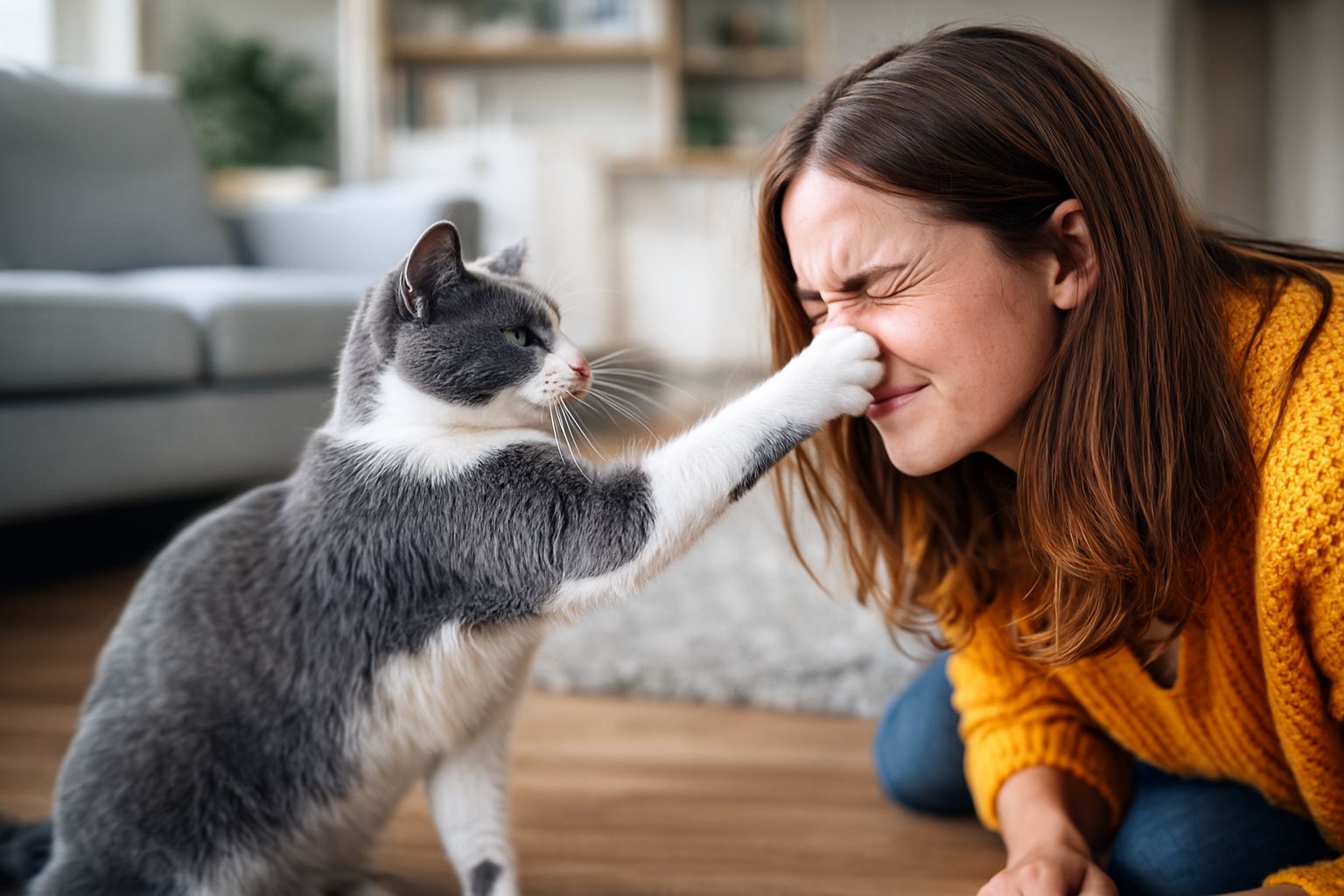
So, why is your cat slapping or hitting you with their paw in the first place? There are a few different reasons your cat is pawing or paw-slapping at you. And some tips to help you stop this behavior if it bothers you.
Your Cat Might Be Seeking Attention
One of the most common reasons a cat hits you with their paw is simple: they want your attention. Some cats paw gently at their pet parents to request petting, playtime, or a refill of the food bowl. Because cats quickly learn what gets a response, a well-timed tap can become a go-to communication tool.
Attention-seeking paw taps are typically light, non-threatening, and often paired with other friendly behaviors, such as purring, rubbing against you, or staring at you expectantly. If your cat lightly “slaps” you when you're busy, it may be their way of saying, “Hey… look at me!” However, if you make sure your kitty has plenty of enrichment or other outlets, predictable routines, and daily interactive play, it can reduce these surprise taps.
Overstimulation Can Trigger a Quick Swat
Many cats have a limit when it comes to petting. What starts as a relaxing cuddle can quickly become overwhelming, especially for cats who are more sensitive to touch. When a cat becomes overstimulated, they may swat or slap you as a polite warning that they need a break.
Some of the signs that your cat is reaching their “petting” threshold include tail flicking, skin twitching, dilated pupils, or ears turning sideways. If you stop petting before the slap happens, your cat learns that they can trust you to respect their boundaries. Over time, this can help reduce swatting altogether.
Cats Use Their Paws to Communicate
In feline body language, a paw slap isn’t always negative and sometimes it’s simply communication. Cats use their paws to explore, initiate interactions, and express how they feel.
A quick tap can mean many things, depending on the situation:
A gentle, closed-paw tap during play signals excitement.
A soft hit may invite play or curiosity.
A warning swat (often with ears back or a hiss) communicates discomfort or fear.
Because cats are silent communicators, their paws often speak louder than their vocalizations. Learning to read your cat’s signals can help you respond appropriately, whether they’re asking for your attention or asking for space.
Play Behavior Can Turn Into a Slap
Cats are natural hunters, and their play style reflects that. Many cats initiate play by lightly batting at objects, including your hands, ankles, or clothing. What looks like a “slap” may actually be instinctive play behavior, especially in younger or high-energy cats. Some cats take this slapping to knocking items off a table as their fun way of playing and burning off energy.
This type of pawing often includes zoomies, playful body language, and a bouncy posture. If your cat routinely swats during play, offering appropriate toys such as wands, kickers, or interactive puzzles helps redirect their energy away from your skin. Reinforcing play with toys instead of hands is one of the best ways to prevent accidental scratches.
Redirected Frustration Can Cause Sudden Pawing
Sometimes a cat hits you because they’re frustrated or by something else such as another pet, a window bird they can’t reach, a loud noise, or a sudden change in the environment. This is known as redirected aggression.
In these cases, the slap isn’t personal. Your cat is simply reacting to a surge of energy or stress and redirecting it toward the closest moving thing. The best thing you can do is give our cat time to decompress, offering calming enrichment, and maintaining predictable routines can help prevent these moments from escalating.
When Paw Slapping Might Mean Something More
While most paw taps are harmless, a sudden change in behavior can signal discomfort or an underlying medical issue. Cats in pain, stressed cats, or anxious cats may be more reactive, even during routine interactions. If your normally gentle cat starts slapping frequently, especially with their claws out, it’s worth mentioning to your veterinarian.
Even environmental changes or new furniture, a new pet, or a schedule change can also contribute to increased slapping or swatting. The best thing you can is to support your cat with extra play, enrichment, and calm spaces where your cat can retreat to help your cat adjust.
How to Respond When Your Cat Slaps You
The best way to respond depends on why it happened. Reading their body language is key:
If your cat wants attention: redirect to play or a gentle petting session.
If your cat is overstimulated: stop touching them and give space.
If your cat is exhibiting playful energy: switch to toys, not hands.
If it’s is frustrated: remove the stressors when possible and offer enrichment.
Always Avoid punishment: yelling, tapping your cat’s nose or pushing your cat away can damage trust and increase anxiety.
Final Thoughts: Understanding Your Cat Builds a Better Bond
A cat slapping or hitting you with their paw is almost always a form of communication, not aggression. Whether your cat is overstimulated, craving attention, or simply expressing him or herself, these behaviors are normal parts of feline communication. When you learn what your cat is trying to tell you, you’ll help your cat feel safer, calmer, and happier.