- Your Pet's Wellbeing
- Posts
- Why Does My Dog Sleep With His Eyes Open?

It can feel a little unsettling to look over at your dog and realize he appears to be sleeping with his eyes open. You might wonder if something is wrong, especially if you notice a blank stare or slight eye movement while he rests. The good news is that this behavior is surprisingly common in dogs, and in most cases, it is completely normal.
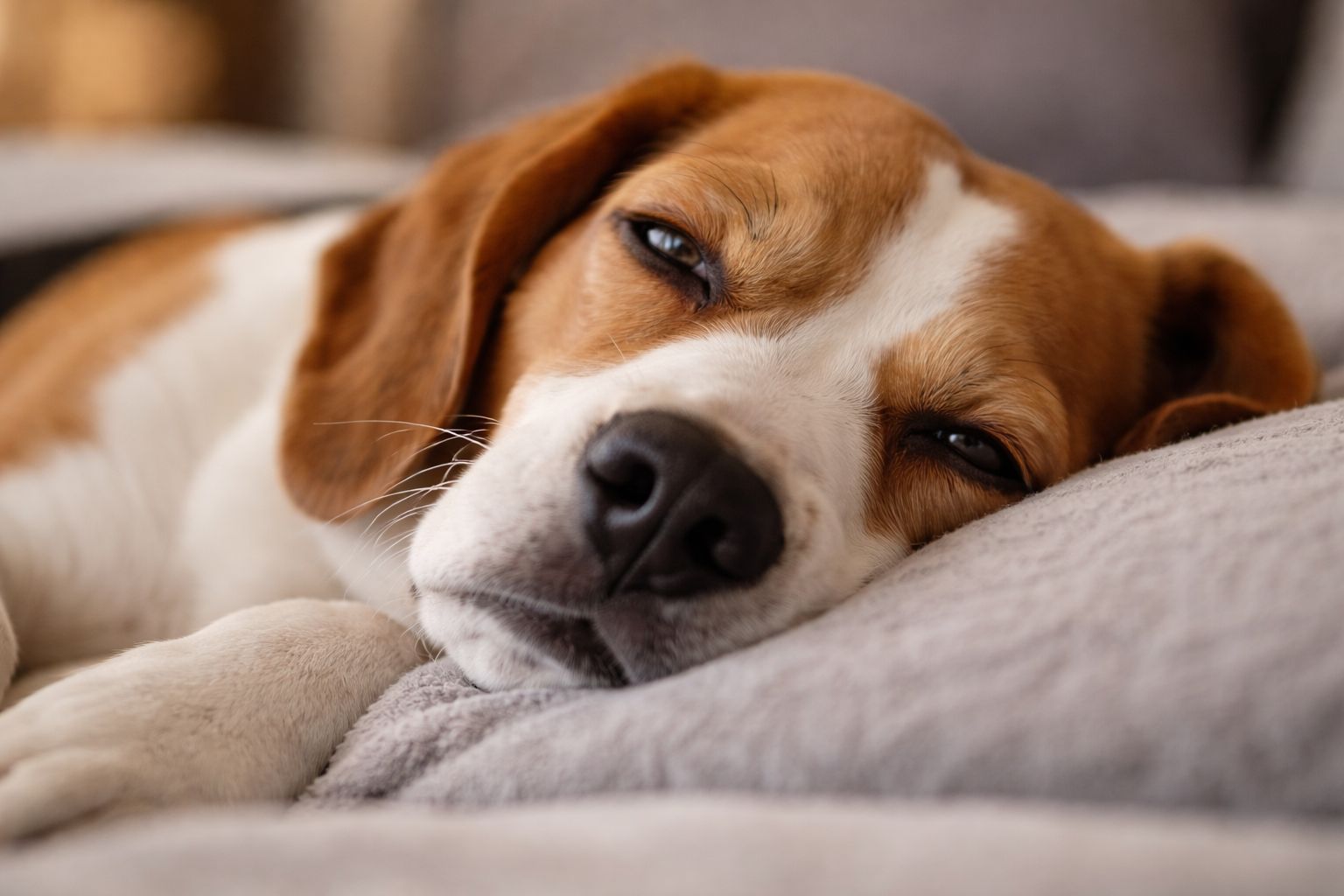
While not all dogs sleep with their eyes open, they might do so occasionally and there are a few reasons why this could happen.
Dogs Don’t Always Sleep Like Humans
Humans tend to associate sleep with fully closed eyes, still bodies, and deep rest. Dogs, however, experience sleep differently. Just like people, dogs go through different sleep stages, including light sleep and deeper rapid eye movement (REM) sleep. During lighter sleep phases, your dog may not fully close his eyelids. This can make it look like he is awake, even though he is resting.
Dogs are naturally more alert sleepers than we are. This trait comes from their evolutionary past, when staying partially aware of their surroundings to help them respond quickly to potential threats. Even domesticated dogs still carry some of these instincts, which is why your dog might nap with his eyes partially open or react quickly to sounds while resting.
The Role of the “Third Eyelid” (Nictitating Membrane)
One of the most common reasons your dog may appear to sleep with his eyes open has to do with something called the third eyelid. Dogs have an additional protective layer in their eyes known as the nictitating membrane. This thin, translucent eyelid can slide across the eye to keep it moist and protected while still allowing some visibility.
When your dog is sleeping, this third eyelid may partially cover the eye instead of the outer eyelids fully closing. As a result, you might see a cloudy, pink or slightly open appearance, which can look unusual if you are not familiar with it. This is a completely normal biological feature and plays an important role in eye health. It’s your dog’s eyes naturally keeping their eyes moist and dust away from their eyes. Just like we have tears at times.
Light Sleep vs. Deep Sleep
If your dog is in a light sleep stage, it is very common for his eyes to remain slightly open. During this phase, he may also move his ears, twitch, or respond to small noises. Dogs often cycle in and out of light sleep throughout the day, especially if they are napping rather than settling in for a long stretch of rest.
In deeper sleep stages, particularly REM sleep, dogs are more likely to fully relax. However, even then, you might notice eye movement behind partially open lids. This is often when dreaming occurs. If you see your dog twitching, paddling his legs, or making small noises while his eyes appear open, he is likely dreaming.
Instincts and Awareness
Dogs are naturally wired to stay somewhat alert, even when resting. In the wild, being completely unaware of surroundings could put an animal at risk. While your dog may be safe and comfortable at home, those instincts do not disappear entirely.
When your dog sleeps with his eyes partially open, it allows him or her to maintain a level of awareness. They can quickly wake up if they hear a noise, sense movement, or detect something unfamiliar. This is especially true for dogs that are more protective, anxious, or highly alert by nature.
If your dog tends to sleep with his eyes open in new environments or around unfamiliar people, it may simply be a sign that he is staying cautious rather than fully relaxed.
Breed Tendencies and Physical Traits
Some dogs are more likely to sleep with their eyes open due to their physical features. Breeds with shorter snouts or prominent eyes may have eyelids that do not fully close as tightly as other dogs. This can make it appear as though their eyes are open even when they are resting comfortably.
And, of course, each dog sleeps differently and develops their natural sleeping patterns. Just like we have unique sleeping habits, dogs develop their own routines and patterns. Some dogs always curl up tightly and close their eyes completely, while others stretch out and rest with a more “open” appearance. Each dog has their own, preferred sleeping positions.
When It Might Be a Concern
While your dog sleeping with his or her eyes open is usually harmless, there are a few situations where it could indicate an underlying issue. If your dog’s eyes remain fully open and appear dry, red, or irritated, it may signal a problem with eye lubrication or eyelid function.
You should also pay attention if your dog seems unable to fully close his eyes even when awake or if he shows signs of discomfort, excessive tearing, or discharge. In some cases, nerve issues or eye conditions can affect how the eyelids function.
Changes in sleep behavior can also be worth noting. If your dog suddenly starts sleeping with his eyes open when he never did before, or if the behavior is accompanied by lethargy or unusual symptoms, it is a good idea to consult your veterinarian for guidance.
Helping Your Dog Sleep Comfortably
Even though this behavior is typically normal, creating a comfortable sleep environment can help your dog relax more deeply. A quiet, secure space away from constant noise or activity allows your dog to feel safe enough to enter deeper stages of sleep.
Providing a supportive bed, maintaining a consistent routine, and making sure that your dog gets enough physical and mental exercise during the day can all contribute to better sleep quality. When dogs feel calm and secure, they are more likely to fully relax, which may lead to more closed-eye deeper sleep.
Final Thoughts
Seeing your dog sleep with his eyes open can feel strange at first, but in most cases, it is simply a reflection of how dogs are built and how they rest. Between lighter sleep cycles, protective instincts, and the presence of a third eyelid, this behavior is usually nothing to worry about.
By paying attention to your dog’s overall health, comfort, and behavior, you can easily tell the difference between normal sleep habits and something that might need a closer look. Most of the time, that slightly open-eyed “sleeping stare” is just your dog catching some rest while staying gently aware of the world around him.