- Your Pet's Wellbeing
- Posts
- Why the Big Sigh? What Your Dog's Groans, Moans and Exhales Mean
Why the Big Sigh? What Your Dog's Groans, Moans and Exhales Mean
Happy or Sad?

Lisa Fimberg
January 07, 2026
Dogs communicate constantly, even when they seem quiet. Those dramatic sighs, soft groans, and long, slow exhales that happen when your dog flops onto the couch or curls up on their bed are more than random noise.
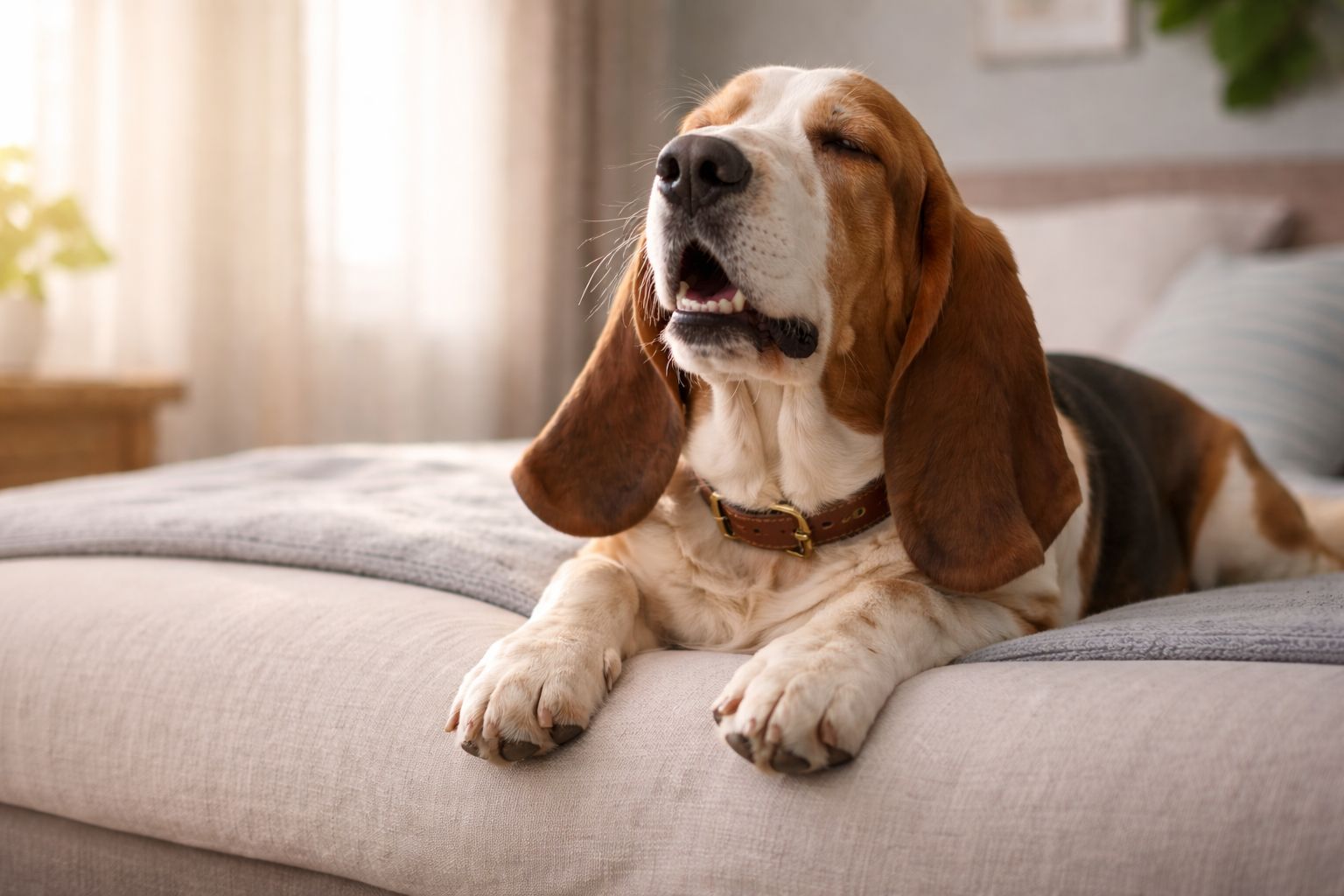
These low, often endearing vocalizations usually have nothing to do with pain or distress. Instead, they serve as emotional releases as a way for dogs to process feelings, settle their bodies, and communicate subtle shifts in mood. Once you learn how to read the context, those noises start to make perfect sense.
Why Dogs Sigh When They Lie Down
Dogs sigh for many of the same reasons humans do. A deep exhale often signals a release of tension. When your dog circles a spot, drops down, and lets out a long sigh, he or she usually feels safe, relaxed, and ready to rest. This type of sigh commonly appears during nap time, bedtime, or after a long walk.
A contented dog sigh tends to coexist with a loose body language. You may notice your dog’s relaxed ears, soft eyes, a slightly open mouth, or a slow blink. In this moment, your dog communicates comfort and satisfaction as a quiet way of saying, “All is well.”
Dogs also sigh after moments of excitement. After playtime or a burst of activity, a deep exhale helps regulates their breathing and calm the nervous system. This calming sigh plays an important role in helping dogs transition from active to restful states.
When a Dog’s Sigh Signals Disappointment
Not every sigh means contentment. Dogs also sigh when they feel let down. For example, if you put your dog’s favorite toy away, close your laptop instead of heading outside, or stop petting a very happy pup, you’ve likely heard the disappointment sigh. This version sounds slightly heavier and may come with a slow head drop or a dramatic flop onto the floor.
In these moments, dogs release emotional tension rather than physical stress. They recognize that something enjoyable has ended, and the sigh helps them cope. This behavior doesn’t indicate sadness or anxiety; it simply shows that your dog processes expectations and outcomes much like humans do.
What Dog Groans Mean When Settling In
Those soft groans dogs make while stretching out or adjusting their position usually signal comfort. When dogs groan as they lower themselves onto the couch or bed, they often feel safe, relaxed, and fully at ease in their environment. Many dogs groan during a long stretch, especially older dogs or large breeds.
Comfort groans frequently accompany loose muscles, slow movements, and relaxed breathing. Some dogs even groan when they receive belly rubs or scratches in favorite spots. In these cases, the sound acts as a positive response or a vocal expression of pleasure and trust.
Why Dogs Moan During Rest or Affection
Moaning tends to sound softer and more drawn out than groaning. Dogs often moan when they settle into a deep resting position or enjoy extended physical contact. A gentle moan during cuddling or petting typically reflects emotional satisfaction and bonding.
This type of moaning can also appear when dogs feel extremely comfortable in familiar spaces. Dogs that trust their environment and caregivers often vocalize more freely, using moans and sighs to communicate calmness and security.
Emotional Release: The Real Reason Behind These Sounds
At the heart of most sighs, groans, and moans lies emotional control. Dogs experience stress, excitement, anticipation, and frustration just like we do. These sounds allow them to release built-up emotion without escalating behavior.
A dog that sighs frequently during rest may simply have a healthy emotional outlet. These vocalizations help the body transition from alert to relaxed states, balancing the nervous system and preventing overstimulation.
How Body Language Changes the Meaning
Context matters more than the sound that your dog is making. A sigh paired with a relaxed posture means something entirely different from a sigh paired with stiffness or avoidance. Always observe what your dog’s body communicates along with the vocalization.
A relaxed dog will show loose limbs, soft eyes, and natural breathing patterns. A frustrated dog may sigh while turning away, flattening ears briefly, or pausing movement. A bored dog may sigh repeatedly while pacing or watching activity from a distance.
Reading the whole picture can help you understand whether your dog is expressing contentment, disappointment, or restlessness.
Boredom Sighs vs. Relaxation Sighs
Boredom sighs tend to sound shorter and repeat more frequently. Dogs that feel under-stimulated may sigh while lying awake, watching movement around the house, or waiting for interaction. These dogs often appear alert rather than sleepy.
Relaxation sighs usually occur once or twice before a dog fully settles. Your dog’s body softens, eyes close, and breathing slows. Recognizing this difference helps pet parents adjust enrichment and daily routines when needed.
When Groans and Sighs Are Completely Normal
In healthy dogs, these vocalizations are part of everyday communication. Puppies, adults, and seniors all sigh and groan, though older dogs may do so more frequently due to stiffness or slower movements. As long as your dog moves comfortably, eats normally, and shows no signs of pain, these sounds rarely indicate a problem.
Many dogs develop signature noises that become part of their personality. Some breeds and individuals vocalize more naturally, especially when settling in or expressing satisfaction.
When to Pay Closer Attention to The Groans or Sighs
While most groans and sighs are harmless, sudden changes deserve attention. A dog that starts vocalizing during movement, standing up, or lying down, especially if paired with stiffness, limping, or avoidance, could be experiencing discomfort.
Persistent groaning, whining, or signs of distress warrant a closer look. Always trust your instincts if a sound feels different from your dog’s normal behavior.
Key Takeaway: Observe The Timing, Not Just the Sound
Dogs don’t sigh, moan, or groan randomly. These sounds reflect emotional processing, comfort, and communication. By observing your dog’s body language, timing, and surrounding circumstances, pet parents can understand exactly what their dog expresses.