- Your Pet's Wellbeing
- Posts
- Are Female Dogs More Affectionate Than Male Dogs?

If you’ve ever compared a male and female dog on how they interact with you, you’ve probably noticed some subtle differences in how they show love. Some pet parents swear their female dog is more independent and selective with affection, while their male dog is the ultimate cuddle bug.
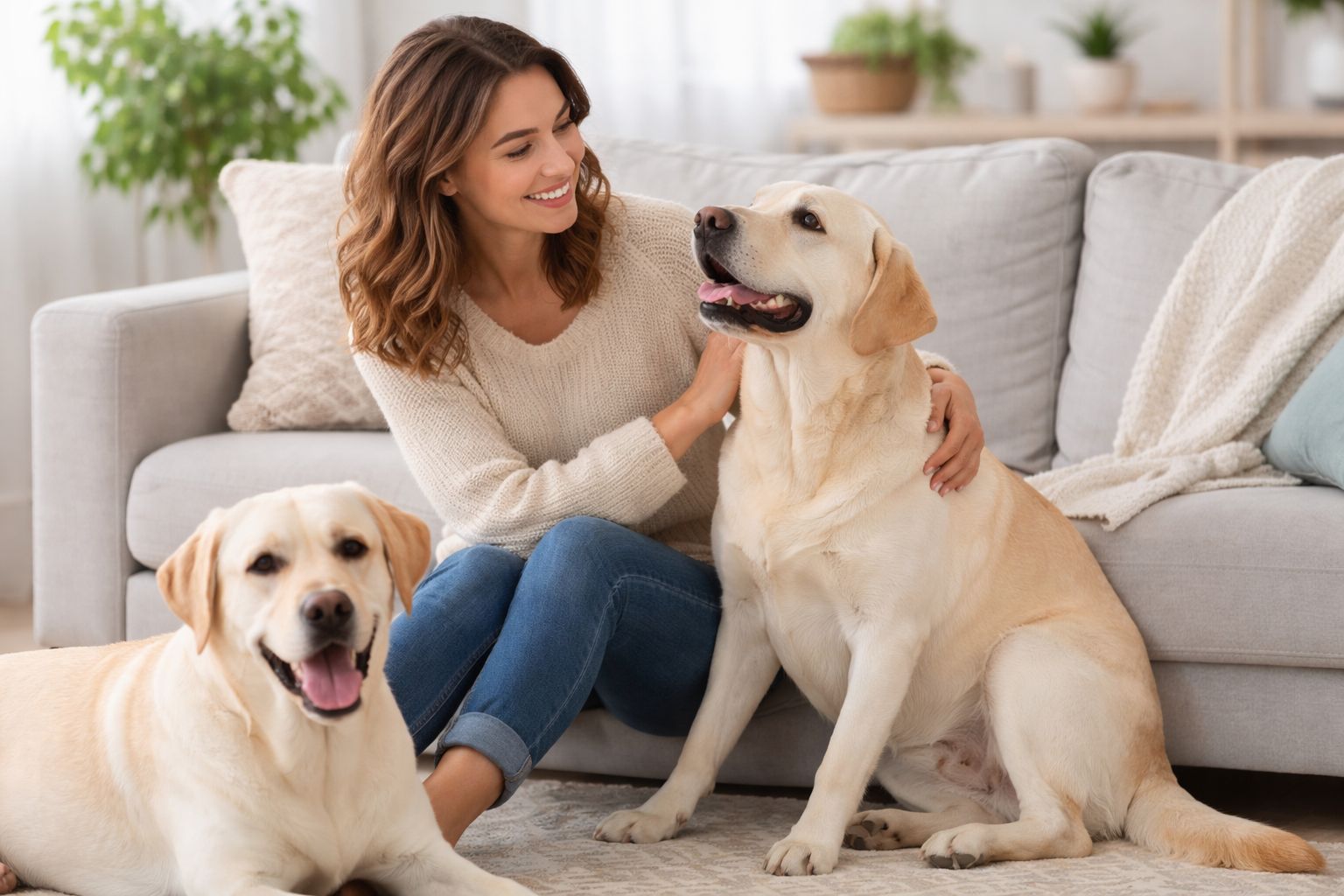
So, what’s the truth? Are male dogs more affectionate than female dogs, or does it really come down to personality and how (or by whom) they were raised?
The answer isn’t quite as simple as it might seem. Affection in dogs is really influenced by a mix of biology, hormones, breed tendencies, and life experiences. While there are some general patterns between male and female dogs, those differences are often more subtle might think.
Understanding What “Affectionate” Really Means in Dogs
Before comparing male and female dogs, it helps to define what affection actually looks like in dogs. Dogs don’t express love in exactly the same way we do. Instead, affection can show up as leaning against you, following you from room to room, making eye contact, licking you (or your feet!), or simply choosing to stay close.
Some dogs are outwardly affectionate, constantly seeking touch and attention. Others are more subtle, showing loyalty and attachment in quieter ways. When people describe a dog as “more affectionate,” they’re usually referring to how physically demonstrative or clingy the dog appears.
The difference is important because a dog that isn’t overly cuddly isn’t necessarily less loving, it might just be that they express their love differently.
General Differences Between Female and Male Dogs
There are a few commonly observed behavioral tendencies between male and female dogs that can influence how affectionate they seem. While these aren’t true of all dogs, they do appear often enough to shape our expectations.
Male dogs are often described as more openly affectionate. They tend to seek attention more frequently, enjoy physical closeness, and may act more playful or “needy.” Many male dogs form strong bonds with their humans and show their affection through constant companionship.
Female dogs, on the other hand, are often seen as more independent. They may still be deeply attached to their owners, but they’re sometimes less demanding about it.
Female dogs can be affectionate on their own terms, choosing when and how they want to engage rather than constantly seeking interaction. They also tend to be more focused, attentive and easier and more willing to be trained than male dogs.
This difference alone can lead us to perceive male dogs as more affectionate, simply because their affection is more obvious and overt.
Personality Matters More Than Gender
One of the biggest misconceptions about dog behavior is that gender determines personality. In reality, individual temperament plays a much larger role in how affectionate a dog will be.
Some female dogs are incredibly clingy, constantly seeking attention and physical closeness. At the same time, some male dogs are more aloof and independent. These variations often have more to do with genetics, early socialization, and life experiences than whether the dog is male or female.
A dog raised in a loving, interactive environment is more likely to develop strong social bonds and affectionate behaviors, regardless of gender. Similarly, a dog that has experienced stress, neglect, or limited socialization may be more reserved.
Breed Tendencies Can Influence Affection
Breed characteristics often have a stronger influence on affection levels than gender. Some breeds are naturally more people-oriented and affectionate, while others are more independent by nature.
For example, companion breeds like Labradors, Cavalier King Charles Spaniels, Bichon Frise, and Shih Tzus are known for thriving on close human interaction and tend to be outwardly affectionate, frequently seeking cuddles, lap time, and loves being near or with you.
On the other hand, working or guarding breeds such as the German Shepherd, Rottweiler, and Doberman Pinscher may form incredibly strong bonds with their pet parents but tend to express that connection through loyalty, attentiveness, and protective instincts rather than continuous physical affection.
How Dogs Bond With Their Pet Parents
Another factor that shapes affectionate behavior is how dogs form attachments. Dogs are highly social animals, and their relationships with humans are built through shared experiences, trust, and routine.
Male dogs sometimes form strong bonds with one person and may follow that individual closely, seeking attention and approval. Female dogs may distribute their attention more evenly among family members or show a more balanced attachment style.
This doesn’t mean one is more affectionate than the other, it simply reflects different ways of forming connections.
Training and Reinforcement Shape Affection
Affectionate behavior can also be influenced by how it’s reinforced. Dogs learn quickly which behaviors earn attention, praise, or treats. If a dog receives positive reinforcement for being cuddly or staying close, they’re more likely to repeat those behaviors.
Pet parents who encourage closeness, petting, and interaction often end up with dogs that are more outwardly affectionate, regardless of gender. On the other hand, dogs that are rewarded for calm independence may appear less demonstrative but are still deeply bonded. Often more focused, attentive, and easier to train, but also more inclined to be independent. They may be more affectionate on their own terms.
Consistency, training style, and daily interaction all play a major role in shaping how a dog expresses affection.
Are Female Dogs Less Affectionate or Just Different?
It’s easy to for us to misinterpret independence as a lack of affection. Female dogs are often described as more self-sufficient, but that doesn’t mean they love their humans any less. In many cases, their affection is just more subtle or selective.
A female dog may choose to sit near you rather than on you or check in periodically instead of constantly seeking attention (they respect you and your boundaries!). These behaviors still reflect a strong emotional bond; they just don’t always match the stereotypical image of a “clingy” dog.
The Bottom Line: It’s Not About Female Vs. Male Dogs
So, are female dogs more affectionate than male dogs? The more accurate answer is that affection isn’t determined by gender alone. While male dogs are often perceived as more outwardly affectionate and female dogs as more independent, these are general trends rather than rules.
In reality, a dog’s personality, upbringing, breed, and relationship with their pet parents matter far more than whether they are male or female. Both male and female dogs are capable of forming deep, loving bonds with their pet parents; they just may express that affection in different ways.
At the end of the day, the more affectionate dog isn’t defined by gender, but it’s the one that forms a strong, trusting bond with you and shows up in your life with loyalty, companionship, and love in his or her own unique way.