- Your Pet's Wellbeing
- Posts
- Do Dogs Bond With One Person?

Many dog parents notice their pup seems to favor one person in the household, following him or her from room to room, listening more closely to their commands, or choosing to cuddle up beside them at the end of the day. This naturally leads to the question: do dogs bond with one person? The short answer is yes as many dogs do form a primary attachment, but the full story is a bit more nuanced and ultimately depends on the dog.
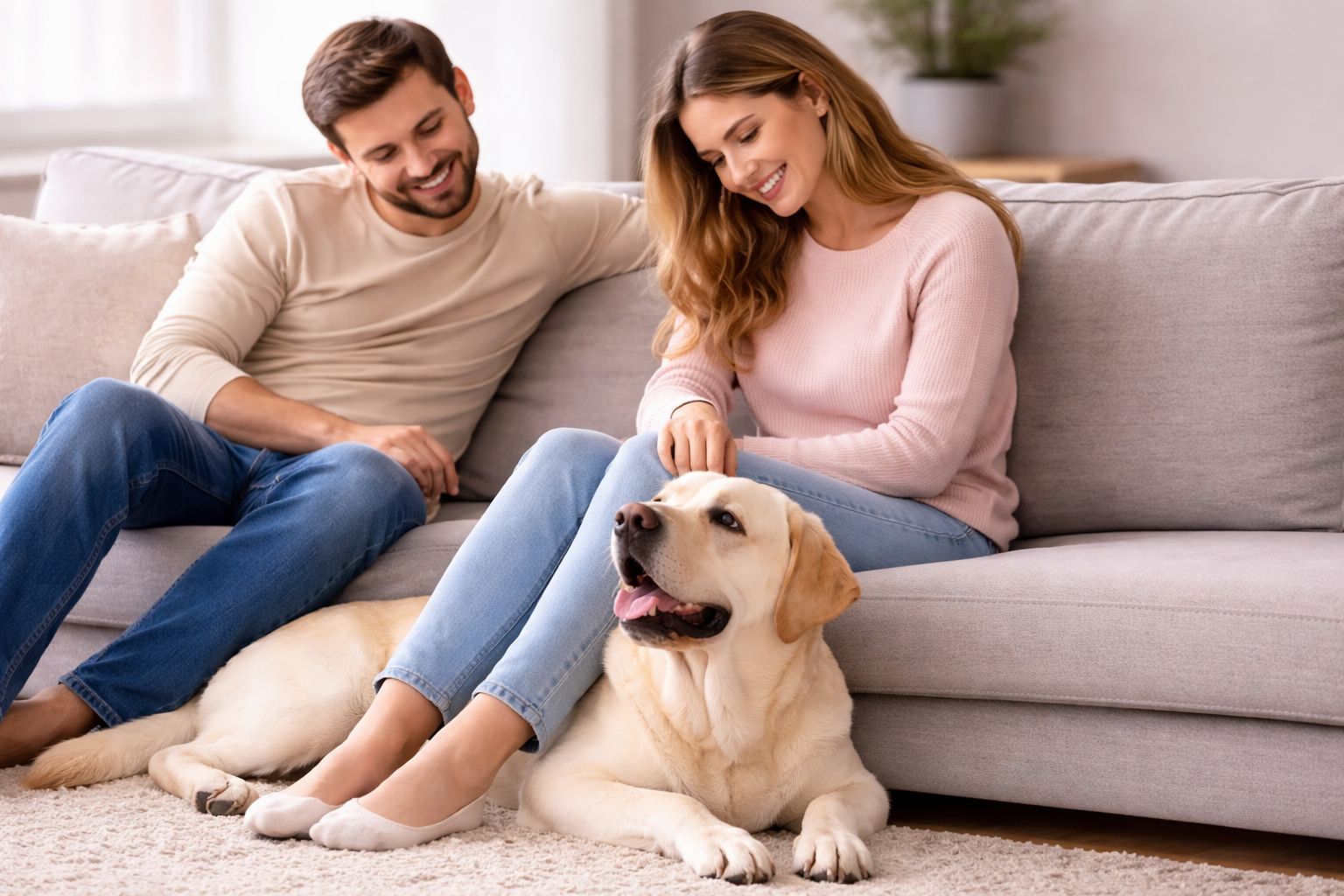
Why Dogs Often Form a Strong Bond With One Person
Dogs are social animals that thrive on connection, consistency, and trust. While they are capable of loving multiple people, they often develop a deeper bond with one individual who becomes their “primary person.” This usually happens because of repeated positive interactions over time.
The person who feeds them, walks them, trains them, and spends the most quality time with them often becomes the center of their world. Dogs associate that individual with safety, comfort, and rewards, which naturally strengthens the bond.
However, it’s not just about who does the most tasks. Emotional connection plays a huge role. A person who is calm, predictable, and attentive to a dog’s needs can become their favorite person, even if someone else technically spends more time handling their daily responsibilities.
The Science Behind Dog-Human Bonds
Research into canine behavior shows that dogs form attachments to humans in a way that’s strikingly similar to how infants bond with caregivers. This attachment is rooted in trust and reinforced by positive experiences.
One of the most well-known studies to this behavior is the “Strange Situation Test,” originally developed to study human infants. When researchers adapted this test for dogs, they found strikingly similar patterns. Dogs showed behaviors like seeking proximity to their owner, becoming distressed when separated, and greeting their owner more enthusiastically upon return, which are hallmarks of attachment seen in young children.
In these studies, dogs also used their owners as a “secure base,” meaning they felt more confident exploring their environment when their person was present. This secure base effect is a key feature of human caregiver-child relationships and has been demonstrated in dogs during problem-solving and exploration tasks. This doesn’t mean dogs are incapable of loving others. Instead, it means they may have their one person they rely on the most and makes them feel secure.
Further, when dogs interact with their favorite person, their brains release feel-good hormones like oxytocin, the same hormone involved in human bonding and just and feeling good overall. This chemical response helps explain why dogs often seek out one person for comfort, especially in stressful situations.
Signs Your Dog Has Chosen Their Person
If you’re wondering whether your dog has bonded primarily with one person, there are some clear behavioral clues. Dogs tend to show their strongest attachment in subtle but consistent ways.
They might follow that person everywhere, even when there’s no obvious reason to do so. They often make more eye contact with them, respond more quickly to their voice, and prefer sitting or sleeping nearby. In multi-person households, a dog may also become more excited when their chosen, bonded person comes home compared to others. All signs that your dog loves you.
Some dogs even display protective behaviors, positioning themselves between their favorite human and perceived threats, or becoming more alert when that person is around.
Do All Dogs Pick Just One Person?
Not all dogs limit their affection to a single individual. Some are naturally more social and spread their love evenly across the household. Breed tendencies, personality, and early life experiences all influence how dogs form attachments.
Certain dog breeds are especially known for forming strong bonds with one person, often due to their history of working closely with humans or their naturally loyal temperament. Breeds like the German Shepherd and Akita are famous for their deep loyalty and protective instincts, while smaller breeds such as the Chihuahua and Dachshund often become extremely attached to a single individual.
Highly intelligent and active dogs like the Border Collie also tend to bond most closely with the person who engages them the most. That said, personality, environment, and daily interaction play just as big a role as breed in determining who a dog connects with most.
Puppies that are well-socialized from an early age are also more likely to feel comfortable and connected with a variety of humans, rather than focusing on just one.
Factors That Influence a Dog’s Favorite Person
Several factors can determine who a dog bonds with most strongly, and it’s not always as obvious as you might think:
Consistency is one of the biggest drivers. Dogs thrive on routine, so the person who provides structure and reliability often earns their trust. Positive reinforcement, like treats, praise, and playtime, also strengthens emotional connections.
Timing can matter as well. If someone was present during key developmental stages, such as puppyhood or a major life transition like adoption, the dog may form a deeper attachment to them.
Personality compatibility is another key factor. Dogs often gravitate toward people whose energy levels match their own. A high-energy dog may prefer someone playful and active, while a more laid-back dog might favor a calm, quiet individual. Some dogs also tend to bond with a person who has a scent they like or even look like them!
Can a Dog Bond With More Than One Person?
Absolutely. While many dogs have a “favorite,” they are fully capable of forming strong, meaningful relationships with multiple people. In fact, healthy dogs in loving homes typically build bonds with everyone in the household, they just may express those bonds differently.
For example, a dog might look to one person for comfort and security, while turning to another for play and excitement. These layered relationships reflect the dog’s ability to adapt and connect in different ways. They might even lick some person more than others due to the smell of the person or familiarly with them.
This is especially common in families where multiple people are involved in the dog’s care and spend quality time engaging with them.
What to Do If Your Dog Prefers Someone Else
It can feel a little disappointing if your dog seems to favor someone else, but it’s important not to take it personally. Bonding is not about worth as much as it’s about patterns, experiences, and emotional associations.
The good news is that relationships with dogs are always evolving. You can strengthen your bond by spending more one-on-one time together, engaging in activities your dog enjoys, and using positive reinforcement during interactions.
Training sessions, walks, and playtime are all excellent opportunities to build trust and connection. Over time, your dog may begin to see you as an equally important part of their world.
When One-Person Bonding Becomes a Concern
While strong attachment is normal, extreme preference can sometimes lead to issues like separation anxiety or resource guarding. A dog that becomes overly dependent on one person may struggle when that individual is not around.
It is important to that your dog has balanced relationships within the household to help prevent this. Having multiple people participate in feeding, walking, and training can create a more well-rounded and secure dog.
If your dog shows signs of distress when separated from their favorite person, such as excessive barking, destructive behavior, or pacing, it may be worth consulting a professional trainer or veterinarian for guidance.
The Bottom Line on Dogs Bonding With One Person
Yes, dogs do bond with one person, but that bond doesn’t have to exclude others. Dogs are incredibly adaptable and capable of forming deep, lasting connections with multiple people, even if they have a clear favorite.
At the heart of it all, dogs bond with those who make them feel safe, understood, and loved. Whether you’re their number one or part of their inner circle, the relationship you build with your dog is shaped by time, trust, and shared experiences, and that’s what truly matters.