- Your Pet's Wellbeing
- Posts
- Why Does My Dog Like To Walk To My Left Side?

Many dog parents notice a curious pattern during daily walks: their dog consistently chooses to walk on the same side. If your dog always walks on your left side, you are not imagining it. Dogs often develop strong side preferences during walks, and those habits can form for several different behavioral and environmental reasons.
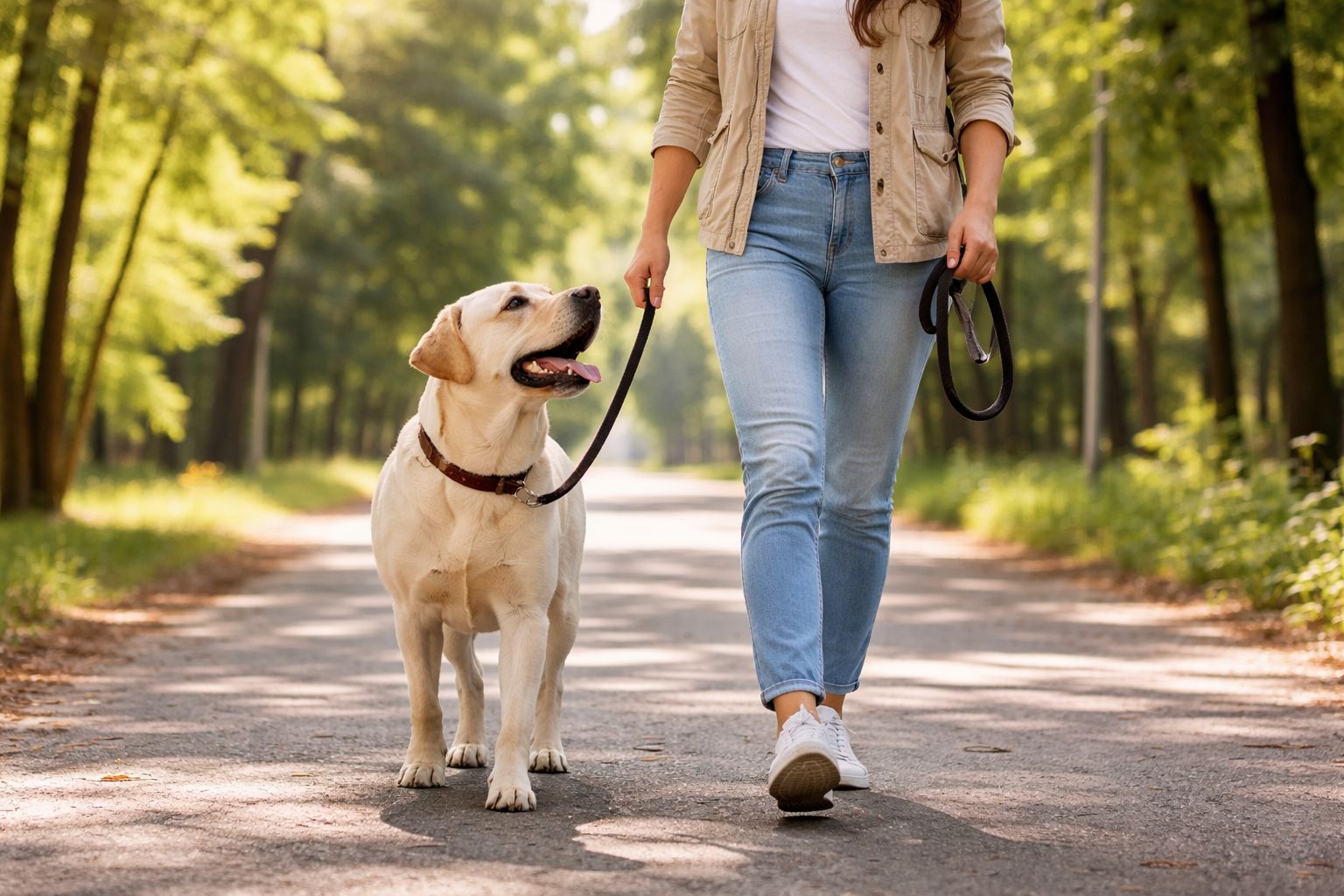
It’s important to understand why your dog prefers to walk to your left side, so it can help you better understand your dog’s instincts, training history, and comfort level while you walk together.
While it might seem like a random quirk, a dog’s preferred walking side often reflects their natural canine behavior combined with learned habits.
Dogs Naturally Form Routine Patterns
Dogs thrive on routine. Once they find a pattern that feels comfortable, they tend to repeat it over and over. If your dog has walked on your left side several times early in your walking routine, that position can quickly become their default. Your dog will automatically go to your left side when you’re ready to walk.
Dogs remember patterns very well. The path you take, the side of the street you walk on, the door you exit, and even which hand holds the leash, all of which can subtly guide where your dog positions himself. Over time, walking on your left simply becomes part of the routine your dog expects and starts to prefer.
Because dogs are creatures of habit, they often stick with what feels familiar and predictable. Some dogs will even lay down on walks and don’t get up. If this becomes a pattern, there might need to some new training to try!
Training Traditions Often Favor the Left Side
One of the most common reasons dogs walk on the left side stems from traditional dog training practices. In formal obedience training, dogs are typically taught to “heel” on the left side of their handler.
This tradition dates back decades and likely evolved because most people are right-handed. Keeping the dog on the left side leaves the handler’s right hand free to give signals, hold equipment, or reward the dog.
If your dog has attended obedience classes or has had any form of structured leash training, they may have learned early that the left side is the correct walking position. Even informal training at home can reinforce this preference without you realizing it.
Your Body Language May Encourage It
Dogs constantly read human body language. Small movements, leash positioning, and even the way you swing your arms while you walk can influence where your dog chooses to walk.
For example, if you tend to hold the leash in your right hand, the leash naturally angles across your body toward the left side. This positioning subtly guides your dog to stay there.
Dogs also prefer predictable spacing. If your movements create a clear, comfortable lane on your left side, your dog may simply find that position easiest to maintain while walking beside you.
Dogs May Favor One Side Due to Natural “Pawedness”
Just like humans are right- or left-handed, dogs often show paw preference as well. Some dogs naturally favor one side of their body for movement, balance, and coordination.
If your dog feels more balanced or coordinated when positioned on your left side, he or she may instinctively choose that position during walks. This subtle physical preference can influence how your dog moves beside you, especially on longer walks where comfort matters.
Side preference is surprisingly common in all animals and can affect everything from how they turn corners to where they position themselves next to people. Even some cats prefer sleeping on one side of you.
Your Dog May Be Guarding You
Dogs often place themselves in positions where they feel they can monitor their environment while staying close to their owner. If your dog consistently walks on your left, it might simply be the side that allows your dog to keep the best watch over his or her surroundings.
For example, if other dogs, or passing people tend to approach from your right side during walks, your dog may position themselves on the left so he or she can observe and react comfortably.
Some dogs naturally adopt a protective position beside their pet parents, especially breeds with strong guardian instincts.
The Walking Environment Can Shape the Habit
Your neighborhood layout can also influence your dog’s preferred walking side. If sidewalks, fences, traffic, or other distractions usually appear on one side, your dog may choose the opposite side to maintain distance or feel safer.
Over time, this environmental pattern becomes a learned habit. Your dog starts anticipating where the interesting smells, noises, or passing people will appear and adjusts their walking position accordingly.
Dogs are excellent at mapping their environment and adapting their behavior to it.
Comfort and Personal Space
Dogs value personal space just like we humans do. If you naturally move in a way that creates slightly more room on your left side, your dog may gravitate there because it feels less crowded.
This often happens without your noticing. Your walking stride, arm swing, or even where you carry your bags or purse can create a comfortable pocket of space beside you.
Dogs are extremely sensitive to spatial cues, and they quickly learn where they feel most comfortable walking.
Is It a Problem if Your Dog Only Walks on One Side?
In most cases, a dog preferring one walking side is completely normal and nothing you need to worry about. It simply reflects your dog’s habits, training, and comfort level.
However, if your dog pulls hard to reach that side, constantly crosses in front of you, or becomes anxious when forced to walk on the other side, it may be helpful to gently train them to feel comfortable on either side.
Teaching your dog to walk calmly beside you, regardless of the side, can make walks smoother and safer, especially in crowded areas or narrow paths.
Can You Teach Your Dog to Walk on the Other Side?
Yes, dogs can easily learn to walk on either side with a little patience and consistency.
Start by switching the hand you hold the leash with and guiding your dog into the new position/ side. Reward your dog when he or she stays beside you (on the new side) calmly. Keep your movements relaxed and avoid pulling your dog into place.
Most dogs adapt quickly once they realize the new position still keeps them close to you and earns positive reinforcement.
The Bottom Line
If your dog always walks on your left side, it is usually the result of routine, training traditions, body language, or simplly comfort. Dogs naturally settle into patterns that feel predictable and safe.
Rather than being a strange behavior, a consistent walking side often shows that your dog feels relaxed and confident during your walks together. So, the next time your dog takes the usual spot on your left, you can appreciate that it may simply be your pup’s favorite place to be, right beside you.