- Your Pet's Wellbeing
- Posts
- Why Is My Cat Suddenly Aggressive With Other Cats or People?
Why Is My Cat Suddenly Aggressive With Other Cats or People?
How To Address The Change

Lisa Fimberg
December 08, 2025
If your cat has started to act aggressively towards you or your other cat or dog, it can feel jarring, especially when your normally sweet, gentle cat lashes out without warning. There are many reasons why you cat has suddenly changed his or her demeanor. The first step is figure out why your cat is suddenly aggressive toward other cats, family members, or visitors to try to mitigate situation.
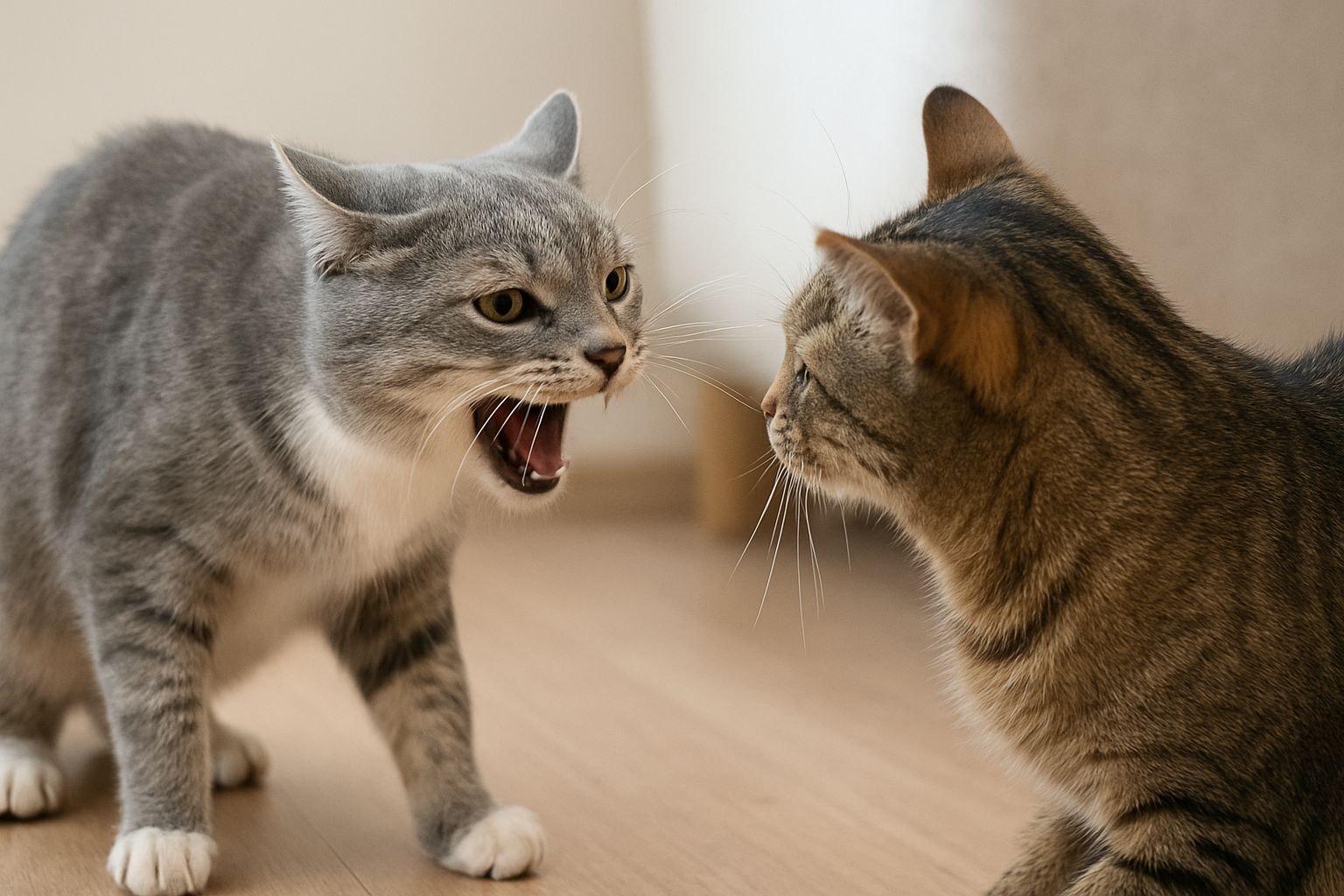
Sudden aggressive behavior in cats always has an underlying trigger. Whether it’s a territorial shift, redirected frustration, medical pain, or resource guarding, identifying the root cause can help you respond in a way that helps calm your cat down.
Understanding What Sudden Aggression in Cats Really Means
To a cat, aggression is a form of communication. It’s their way of saying something that feels wrong, emotionally, physically, or socially. Cats rarely act out “just because.” Sudden hissing, swatting, biting, chasing, or growling can be a sign your cat feels threatened or overwhelmed.
When you look at aggression as a symptom rather than a personality change, it becomes much easier to find a solution. The first thing you need to do is find out the stress trigger that has caused the change.
Below are Some of The Possible Reasons That Your Cat Is Suddenly Acting Aggressively:
Territory Changes Can Cause Aggression Between Cats
Territory is everything to a cat. When your home environment shifts, even slightly. it can lead to tension and fighting. If you recently moved furniture, brought a new pet home, or changed living arrangements, your cat may feel like their safe zone has been invaded. This is one of the most common reasons for sudden aggression in multi-cat households. Even at trip to the vet can cause a cat to act aggressively towards another cat.
When a cat’s territory becomes uncertain, they may act aggressively toward the other cat that seems to be “encroaching.” Even outdoor cats appearing at the window can trigger indoor cats to fight each other. This kind of social stress builds quickly and often explains why cats who used to get along suddenly start chasing, swatting, or staring each other down. The best thing you can do is to try to reestablish your cat’s safe and predictable spaces like hiding spots, boxes, and room dividers can help your cat feel grounded again.
Redirected Aggression: When Your Cat Strikes Out of Frustration
Redirected aggression is one of the most misunderstood types of cat behavior. In this scenario, your cat becomes overstimulated by something he or she can’t reach or control, such as a loud noise, a passing dog outside, or another cat through a window. Since they can’t directly address the source, they “redirect” their frustration toward the nearest person or pet.
This type of sudden cat aggression can look explosive. Your cat may appear terrified or wildly angry, and the aggressive episode can seem to come out of nowhere. Redirected aggression also has lingering effects as cats often remain agitated for hours or even days. If your cat suddenly attacks another household cat after seeing something outside, redirected aggression is a likely explanation.
Blocking outside triggers, offering calming pheromones, and allowing your cat time to cool down can help rebuild calmness and peace. Understanding the pattern also helps prevent future incidents, especially in homes with large windows or active wildlife.
Medical Pain Is a Major Cause of Sudden Cat Aggression
Pain is one of the most overlooked reasons for sudden aggression toward people or other pets. Cats naturally hide discomfort, so subtle medical issues can easily go unnoticed. But if your cat is developing arthritis, dental disease, gastrointestinal discomfort, or any internal pain, they may lash out when touched or approached.
If your normally affectionate cat suddenly bites you when you pick him or her up, growls when you pet their back, or hides in unusual places, pain could be the culprit.
A veterinary exam is important anytime aggression begins abruptly. Treating pain can completely resolve the behavior in many cases. Once your cat feels physically comfortable again, their temperament usually softens quickly.
Resource Guarding: Protecting Food, Space, or Affection
Cats may become aggressive when they feel they need to protect valuable resources. This can include food bowls, favorite sleeping spots, toys, or even the attention of their favorite person. In multi-cat homes, resource guarding is especially common and often emerges suddenly after a stressful event.
For example, if one cat repeatedly blocks the other cat from the litter box or food area, the guarded cat may begin to act defensively. Some cats even guard doorways or specific people, especially if they feel bonded to one person more than others. This behavior can lead to hissing, swatting, or chasing, and it can escalate quickly if the household dynamics are changing.
The best way to avoid this behavior is to offer you cats various feeding stations, litter boxes, resting places, and vertical spaces can reduce competition and lower overall stress. Giving each cat enough room to feel secure is equally important for long term happiness.
Changes in Routine Can Trigger Stress and Behavioral Shifts
Cats truly thrive on predictability. Anything that disrupts their daily routine, such as visitors in the home, new work schedules, holiday activity, or a new baby or pet can trigger agitation that looks like aggression. When cats feel thrown off balance, they may channel that stress through reactive behavior toward other cats or people.
Even subtle changes, like a new scent on your clothing or a door being closed more often than usual, can contribute to your cat’s aggression. By implementing a consistent routine such as mealtime structure, quiet retreat areas, and more predictable interactions, it can help your cat regain a sense of control.
How to Help a Cat Who Has Become Suddenly Aggressive
Although the causes vary, the solutions share a common theme: reducing stress and addressing the root trigger. Giving your cat space, observing patterns, and keeping predictable and calm interactions can allow your cat time to settle down. Once you understand whether the cause is territorial, medical, emotional, or environmental, you can take targeted steps that rebuild trust and reduce anxiety.
If aggression involves two household cats, a temporary separation followed by a slow reintroduction often works well. If the aggression is directed at people, identifying triggers and adjusting interactions, while ruling out pain, will set you on the right track.
When to See a Veterinarian or Behavior Specialist
Any sudden change in behavior, especially one involving aggression, should be evaluated by a veterinarian. Many medical issues can present themselves as irritability or reactive behavior. If the aggression persists even after medical causes are ruled out, a certified feline behavior specialist can help unravel more complex social or environmental factors if necessary.