- Your Pet's Wellbeing
- Posts
- Why Does My Cat Zoom Around the House? And Mostly At Night!
Why Does My Cat Zoom Around the House? And Mostly At Night!
Is This Normal?

Lisa Fimberg
March 24, 2026
If your cat suddenly sprints across the house at full speed, darting from room to room, skidding across floors, and bouncing off furniture, you’ve just witnessed the infamous “zoomies.” While it might seem random (and a little chaotic), this behavior is actually very normal. Those bursts of energy, especially at night, are deeply rooted in your cat’s natural instincts, daily routine, and overall energy levels.
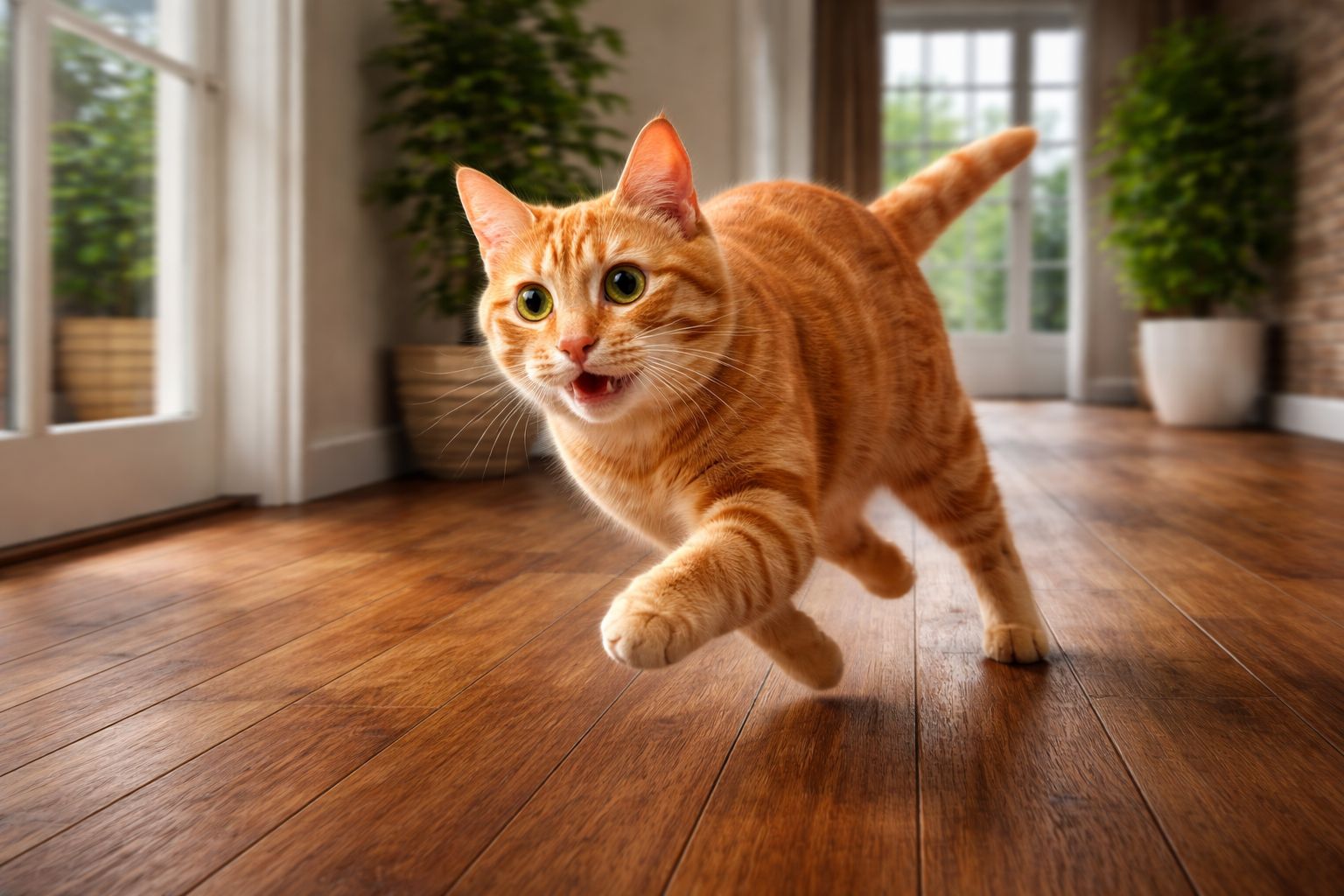
Why do cats suddenly zoom around the house, especially at night? There are many different reasons why cats exhibit this crazy bout of pent up energy and we’ll go over the most common explanations.
Cats Are Naturally Wired for Short Bursts of Energy
Zoomies are a direct reflection of your cat’s biology. In the wild, cats are hunters that rely on short, explosive bursts of speed to catch prey. They don’t run marathons, they sprint, pounce, and then rest. Even indoor cats still carry this instinct.
When your cat suddenly races through the house, your kitty is essentially releasing built-up energy in the way nature designed them to. These high-speed sprints are often followed by a period of calm, mimicking the natural hunt–catch–rest cycle. So, while it may look wild, it’s actually a healthy and normal behavior.
Pent-Up Energy Builds Throughout the Day
One of the most common reasons for cat zoomies is simple: your cat has energy to burn. This isn’t that different from when dogs get the zoomies. Indoor cats, in particular, may not always get enough physical or mental stimulation during the day. Without opportunities to climb, chase, or play, that energy builds up, and eventually has to go somewhere.
That “somewhere” often turns into a sudden sprint across your living room at 11 p.m.
Cats that spend long hours alone or have limited playtime are especially prone to these bursts. Increasing daily enrichment, like interactive toys, climbing spaces, or short play sessions, can help reduce the intensity (and timing) of zoomies.
Your Cat’s Hunting Instincts Come Alive at Night
If your cat’s zoomies seem to happen mostly after dark, there’s a good reason for that. Cats are naturally most active during dawn and dusk, a pattern known as crepuscular behavior. These are the times when their prey would typically be active in the wild.
Therefore, when your cat suddenly tears through the house at night, he or she may be responding to an internal “it’s time to hunt” signal. Even if there’s nothing to chase, their body doesn’t know the difference.
This is why many cats appear calm all day and then become incredibly energetic just as you’re getting ready for bed and can explain why cats are so active at night.
The “Post-Litter Box Zoomies” Are a Real Thing
Some cats experience a sudden burst of energy right after using the litter box. This quirky behavior often surprises owners, but it’s quite common.
There are a few theories behind it. One is that your cat feels relieved and energized after going to the bathroom. Another is that your cat instinctively wants to leave the area quickly to avoid predators, a leftover survival behavior from their wild ancestors.
In most cases, post-litter box zoomies are completely harmless and even a little entertaining.
Zoomies Can Also Be a Sign of Excitement or Happiness
Not all zoomies are about pent-up energy and are just a reflection that your cat is just feeling good. Cats may sprint around after a positive interaction, like eating a meal, playing with you, or even getting the “perfect” nap.
These happy zoomies are often accompanied by playful body language such as an upright tail, bright eyes, and quick direction changes. It’s your cat’s way of expressing excitement and joy in the moment, their own version of a happy dance!
When Zoomies Might Be a Sign of Stress
While zoomies are usually normal, they can occasionally be linked to stress or overstimulation. A sudden burst of frantic energy, especially if paired with hiding, vocalizing, or aggressive behavior, might indicate that your cat is trying to cope with something in their environment.
Changes like a new pet, a move, loud noises, or disruptions in routine can trigger this kind of response. In these cases, helping your cat feel more secure with consistent routines, quiet spaces, and enrichment can make a big difference.
How to Manage Midnight Zoomies
If your cat’s nighttime sprints are disrupting your sleep, there are many ways to help shift their schedule.
The key is to work with your cat’s natural instincts rather than against them. Try adding more interactive play sessions in the evening, especially before bedtime, to help your at bur off energy in a productive way. And then if your follow the play session with a meal, it can help encourage your cat to settle down afterward and get sleepy.
Consistency is important. Over time, your cat may begin to adjust their active periods to better align with your routine. The key is to tire your kitty out as best as you can before you go to bed.
Zoomies Are Normal and Usually a Good Sign
As chaotic as they may seem, zoomies are typically a sign that your cat is healthy, energized, and expressing their natural instincts. Whether it’s pent-up energy, nighttime hunting instincts, or just pure excitement, these bursts of activity are part of what makes cats so unique.
It’s just a burst of happy energy and then off to another nap!